
Does your curry turn lukewarm before you even finish pouring the second helping of roti?
Yeah. Mine too.
I got so sick of reheating food mid-dinner that I decided to test the three big players side-by-side: Sheesham wooden hotpot, ceramic and stainless steel.
Spoiler alert: Steel loses. Badly.
Let’s get into why—and why I’m never going back to metal again.
Look, here’s the deal.
Heat retention is not magic. It’s all about thermal conductivity and fancy words for how fast a material gives away your food’s warmth to the surrounding air.
Wood is a terrible conductor of heat. That’s actually a good thing. The thermal conductivity of Sheesham wood sits around 0.12 to 0.20 W/m·K. Stainless steel? Around 15 to 20 W/m·K.
Do the math. Steel is literally 100 times worse at holding heat. It acts like a radiator. Wood acts like a thick winter jacket.
A scientific study on wooden tableware actually proved this. Researchers found that wooden bowls kept soup warmer for longer compared to other materials and kids even enjoyed their lunch more because the food stayed at the right temperature. That’s not marketing. That’s peer-reviewed data.
So when someone tells you steel keeps food warm, they’re lying to you. Or they’ve never actually used a wooden hotpot.
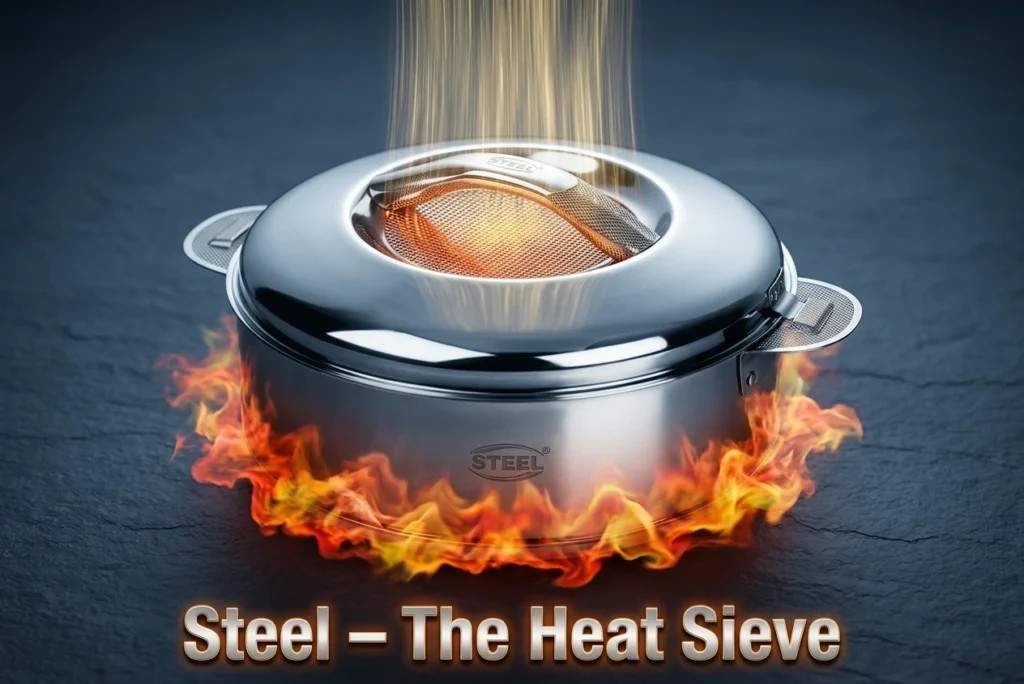
Let’s get this one out of the way first.
Stainless steel is cheap. I get it. You can pick one up for around Rs. 1,500 at any local market. It’s tough. You can drop it, bang it or scrub it with steel wool—it survives.
But honestly? It’s a heat sieve.
By the time you finish pouring the daal, bring the roti basket to the table and sit down with your family, that metal pot is already radiating heat into the air. Your gravy goes from steaming to warm to stale in under 15 minutes.
And the handles? Don’t get me started. They get so hot you need an oven mitt just to slide the pot closer to your uncle.
Here’s another thing nobody talks about: steel creates cold spots. Because metal conducts heat so efficiently, the bottom of the pot gets hot while the sides stay cooler. Your food ends up unevenly heated. One bite is burning hot, the next is barely warm.
Verdict: Good for cooking on the stovetop. Terrible for serving.
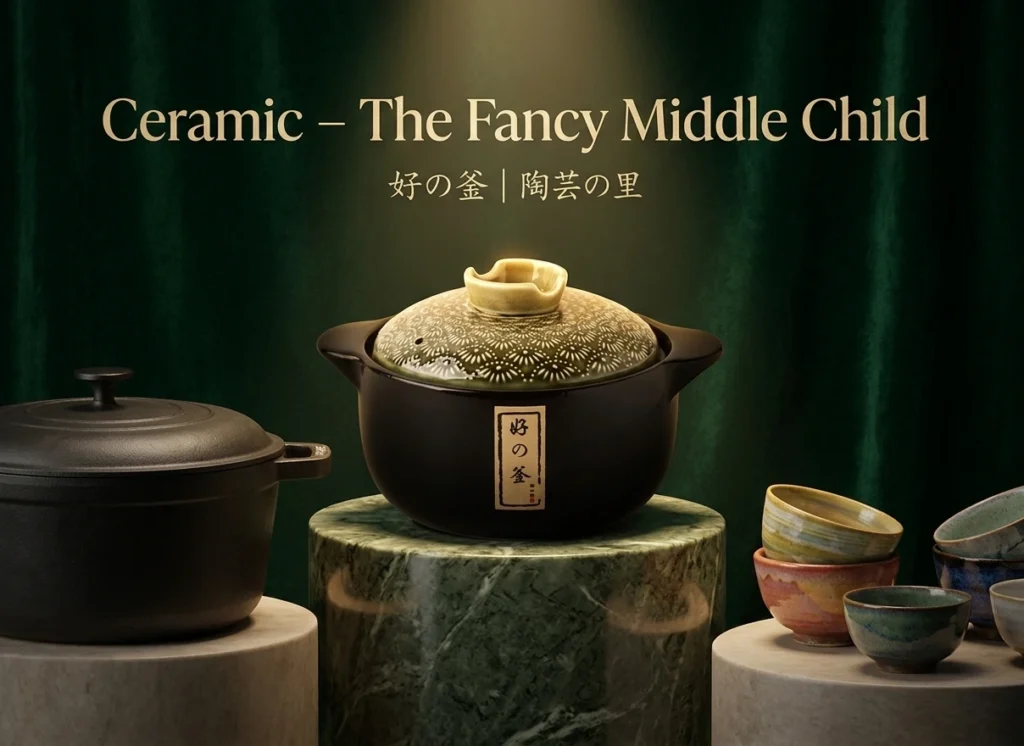
Ceramic sits right in the middle. It’s got better insulation than steel but nowhere close to wood.
I admit that ceramic looks gorgeous on the table. Those hand-painted blue patterns? Stunning. Perfect for a formal dinner party when you want to impress your guests.
But here’s the kicker.
Pick one up. It weighs a ton. My mother-in-law nearly dropped hers last week just trying to carry it from the kitchen to the dining room. A typical ceramic hotpot can weigh 3 to 4 kilograms empty. Add food to that and you’re basically doing a deadlift just to serve dinner.
And on the other thing it is fragile. One accidental knock against the sink, and you’re sweeping up sharp shards and crying over wasted money. A decent ceramic pot in Pakistan runs you around Rs. 2,500 to Rs. 5,000.
Ceramic does have one advantage over steel: it retains heat reasonably well once it’s hot. But getting it hot takes time. You have to preheat it, which means extra gas or electricity. And if you’re serving something that’s already cooked, you’re not getting that benefit anyway.
Sure, it keeps food warmer than steel. But at that weight and price? Not worth the anxiety of breaking it.
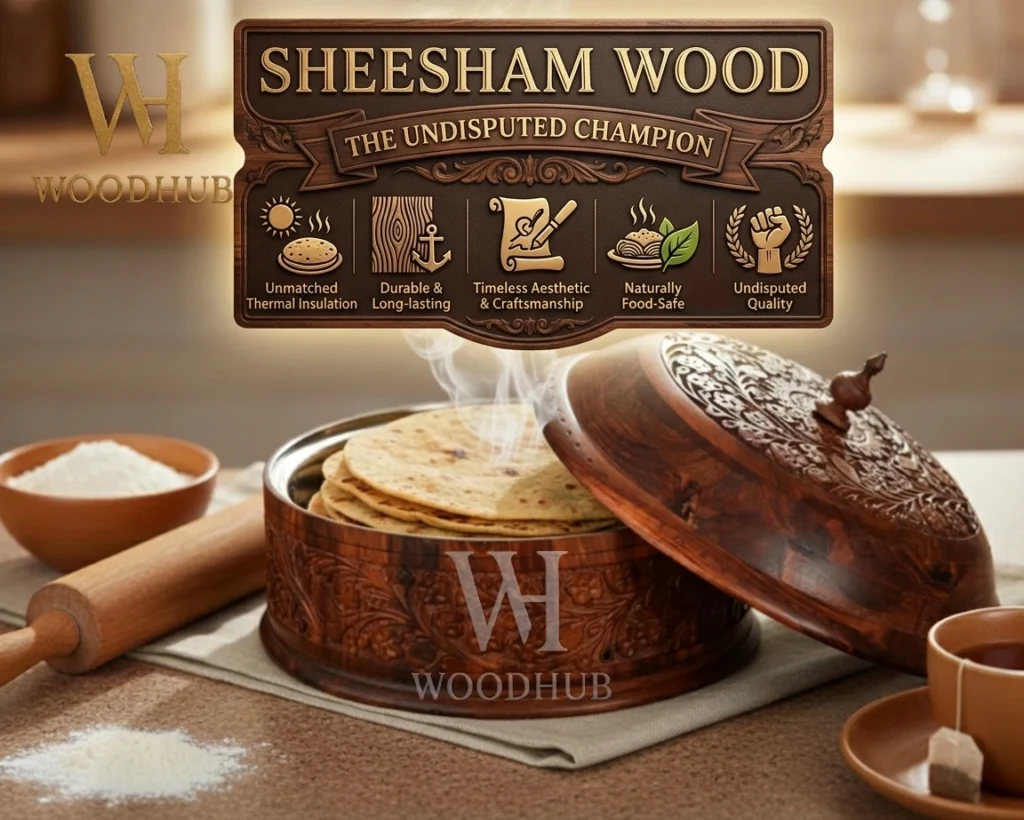
Now we’re talking.
A Sheesham wood hotpot from Woodhub isn’t just a utensil because it’s a piece of tradition. And functionally? It blows the other two out of the water.
Because wood refuses to let heat escape. The tiny air pockets inside the grain trap the temperature right where it belongs: inside your food.
I ran a casual test last Thursday. Made a big batch of chicken karahi. Put half in our old steel pot and half in the Woodhub Sheesham hotpot.
Twenty-five minutes later, the steel batch was lukewarm and oily. The wooden batch? Still steaming. Actual steam rising off it. My brother asked if I’d just taken it off the stove.
That is the difference.
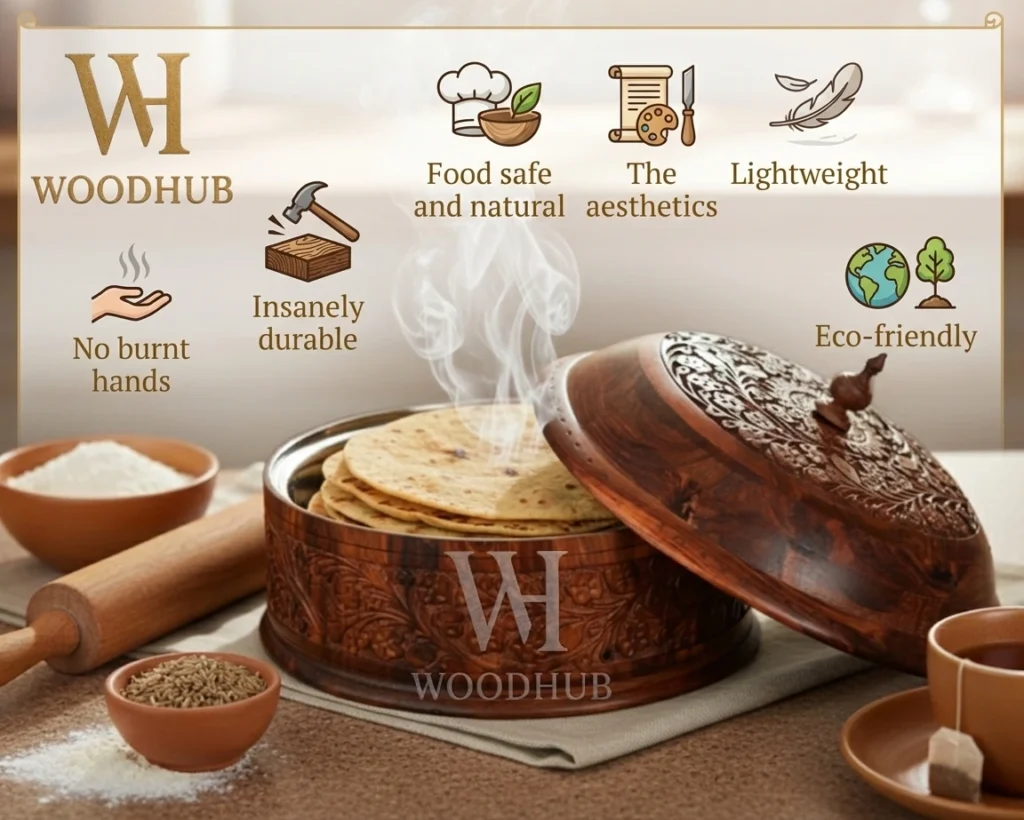
No burnt hands: The outer wood stays room temperature. You can touch it, pass it around the table, let the kids handle it that’s why zero burn risks. Try that with a steel pot that’s been sitting on the stove.
Insanely durable: Sheesham isn’t some cheap plywood. This stuff resists termites, fungi and warping. With a specific gravity of 0.7 to 0.8, it’s dense and heavy-duty wood that can last for decades if you treat it right. We’re talking generations of use. Your grandmother’s wooden hotpot probably outlived three steel ones.
Food safe and natural: Sheesham wood is 100% food-safe, BPA-free, natural and contains no toxic chemicals. It actually has natural antibacterial properties. You’re not eating microplastics or weird chemical coatings. Just in a pure and natural wood.
The aesthetics: Sheesham grain with that deep honey-brown tone—maybe some brass inlay work around the rim? It turns your dastarkhwan into a vibe. A wooden hotpot with brass accents or traditional Tukri carvings isn’t just kitchenware. It’s art.
Lightweight: I can carry a large family-sized wooden hotpot with one hand. Try that with ceramic.
Eco-friendly: Wood is renewable. Steel and ceramic production? Not so much. Every wooden hotpot from Woodhub supports sustainable forestry and local craftsmanship.
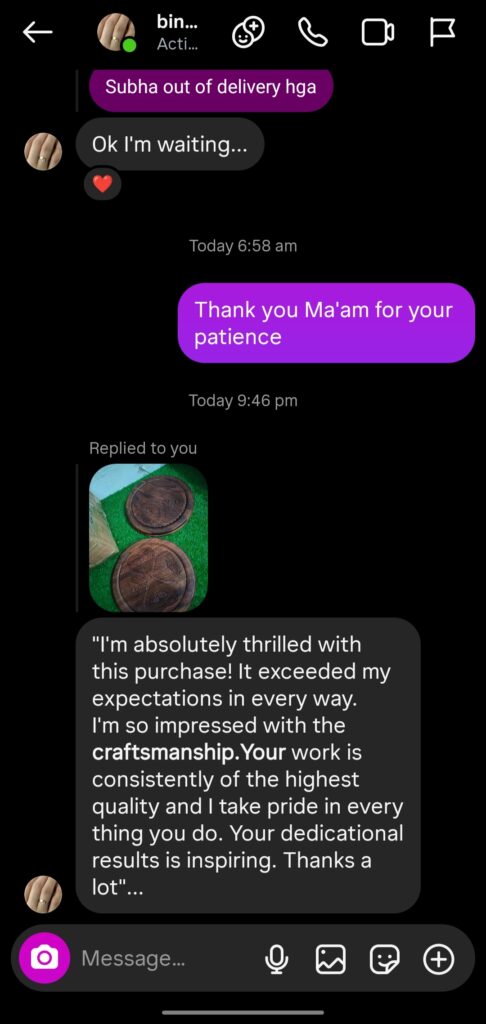
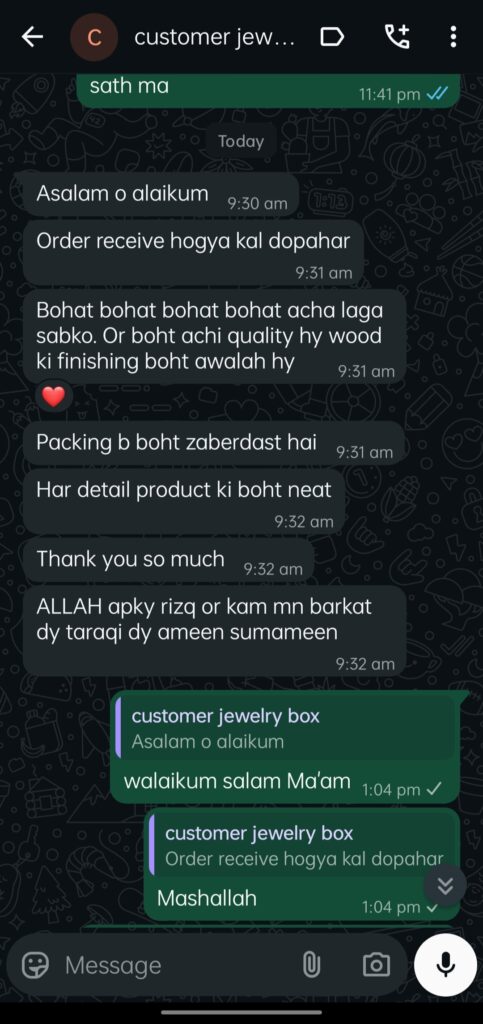
That’s not a paid testimonial. That’s someone who actually uses the product every single day.
I know what you’re thinking. “Wood sounds great, but is it expensive?”
Yeah, wood costs more upfront.
But ask yourself this: Are you willing to pay an extra Rs. 2,000 to actually enjoy hot dinner every single night for the next 20 years? Because that’s exactly what you’re getting.
You’re not buying a pot. You’re buying warm dinners, zero burns and a centerpiece that actually looks good on your shelf.
A steel pot might save you money today. But you’ll replace it in a few years when the handles loosen or the bottom warps. A wooden hotpot? Pass it down to your kids.
Stop overthinking this.
Woodhub.pk gets it right. They use solid Sheesham—no particle board, no shortcuts. Just raw and solid timber shaped by local Pakistani artisans.
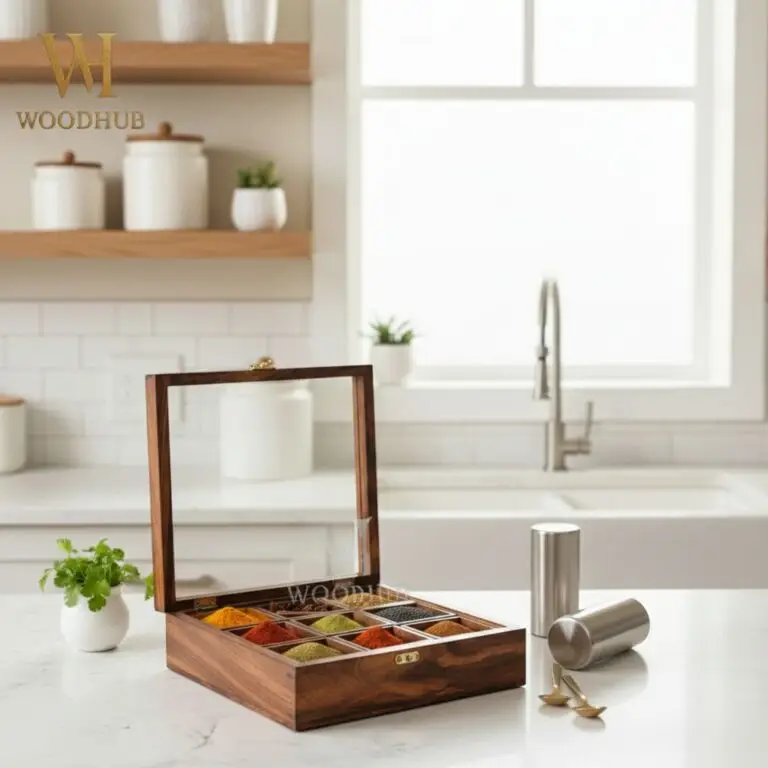
And while you’re at it? Grab one of their famous Masala Boxes to pair with it. They’re already ranking for a reason—because people buy them and never look back. A complete wooden kitchen setup? That’s the dream.
Don’t be that person who puts a wooden hotpot in the dishwasher.
Here’s the real care routine:
That’s it. That’s the entire maintenance routine.
I’ve used all three. Steel sits in my cupboard collecting dust. Ceramic broke within a year. Wood? Still going strong after four years of daily use.
The difference isn’t subtle. It’s the difference between rushing through dinner because the food’s getting cold and actually enjoying a leisurely meal with your family.
If you care about your food,really care—you owe it to yourself to try a wooden hotpot.
➡️ Head over to Woodhub.pk and grab your Sheesham wooden hotpot today.
Trust me. Your family will stop complaining about cold food. And honestly? That alone is worth every rupee.
P.S. — Still confused about steel vs wood? Drop a comment or DM me on Woodhub’s socials. I’ll send you a video of my own dinner test. Seeing is believing.